
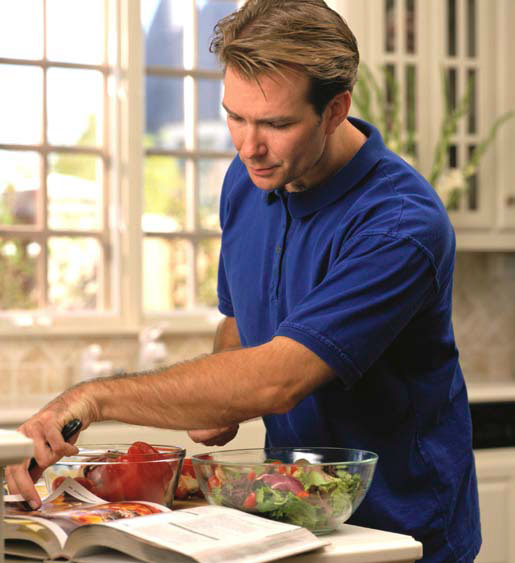
 Using low-saturated-fat, trans fat, low sodium recipes makes it easier to cook healthy meals. There’s a lot you can do with your favorite recipes or everyday meals to control the amount of saturated and trans fats, sugar and sodium you eat. It’s a great way to have your cake and eat it, too!
How can I substitute healthier ingredients?
- Whole Milk (1 cup) = 1 cup low-fat or non-fat milk + 1 Tbsp. unsaturated liquid vegetable oil.
- Heavy Cream (1 cup) = 1 cup fat-free half and half can be used in place of heavy cream in most baking. You can also use soy, almond and rice milk.
- Sour Cream = Use low-fat or fat-free sour cream instead. Unflavored low-fat Greek yogurt is also an easy, heart-healthy swap. You can squeeze some lemon into the yogurt, stir and serve.
- Butter (1 Tbsp.) = 1 Tbsp. unsalted soft tub or liquid margarine or 3/4 Tbsp. polyunsaturated or monounsaturated oil. Use 1 1/4 Tbsp. margarine for 1 Tbsp. oil.
- Shortening (1 cup) = 1 cup unsalted soft tub or liquid margarine (choose margarine low in saturated fat and trans fat or trans fat free). For pies use 1/2 cup margarine for every 2 cups flour. To reduce your calories in muffins or quick breads, substitute 1 cup applesauce for a cup of butter, margarine, oil or shortening.
- White Flour = Instead of white, processed flour try to use whole-wheat flour in your baking. But before you swap, be sure to check the recipe, as the amount may need to be adjusted.
- Ground Beef = try lean, ground turkey in place of ground beef for chili, pasta sauce, burgers and in casseroles.
How can I use vegetable oils?
Use olive, canola, corn, or safflower oil as your main kitchen fats when cooking requires using fat.
For example, use small amounts of these oils:
- To prepare fish and skinless poultry or to brown lean meats.
- To sauté onions and other vegetables for soups, sauces, or stir frying.
- For popping corn.
- In casseroles made with dried peas or beans.
- When cooking dehydrated potatoes and other prepared foods.
To view/download/print the full article, please CLICK HERE