
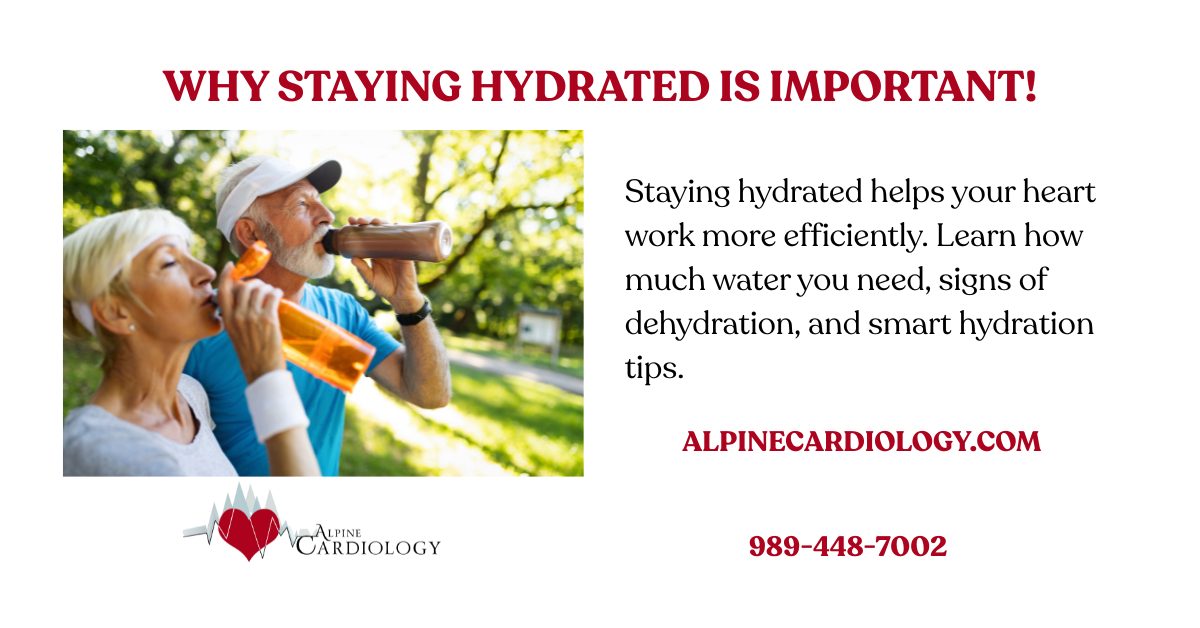
When temperatures rise, staying hydrated becomes more than just a comfort issue—it’s essential for your heart health. Whether you’re exercising, traveling, working outdoors, or simply enjoying a sunny day, drinking enough fluids helps your body and heart function at their best.
Proper hydration allows your heart to pump blood more efficiently through your blood vessels and helps your muscles work with less strain. When fluid levels drop, your heart has to work harder to circulate blood, which can be especially challenging for people with existing heart conditions.
“If you’re well hydrated, your heart doesn’t have to work as hard,” says John Batson, M.D., a sports medicine physician and American Heart Association volunteer.
Dehydration can range from mild symptoms like headaches, fatigue, or swelling in the feet to serious, life-threatening conditions such as heat exhaustion or heat stroke.
How Much Water Do You Really Need?
There’s no one-size-fits-all answer. Hydration needs depend on several factors, including:
- Temperature and humidity
- Clothing and activity level
- Exercise intensity and duration
- Individual health conditions
People who sweat heavily need more fluids than those who don’t. Certain medical conditions—such as diabetes or heart disease—can affect hydration needs, and some medications (including diuretics) increase fluid loss. Older adults may also be less sensitive to thirst, making dehydration more likely.
One important reminder: thirst isn’t always the best indicator of hydration. By the time you feel thirsty, you may already be mildly dehydrated.
A simple and reliable check is urine color. Pale yellow or clear usually means you’re well hydrated. Darker urine is a sign you need to drink more fluids.
A Simple Tip for Active Days
If you want a more precise way to monitor hydration—especially during exercise—weigh yourself before and after physical activity. The difference reflects how much fluid you’ve lost through sweat.
“For every pound lost, you’ll need about a pint of fluid to rehydrate,” Batson explains. During hot-weather activities, it’s not unusual for athletes or outdoor workers to lose several pounds of sweat in a short period of time.
Not sweating at all during vigorous activity can actually be a warning sign of advanced dehydration and possible heat exhaustion.
Is Water Always Best?
For most people, yes.
Water is the healthiest and most effective way to stay hydrated. Many fruits and vegetables—such as watermelon, oranges, cucumbers, and lettuce—also contribute to daily fluid intake.
Sports drinks with electrolytes may be helpful during prolonged, high-intensity exercise in extreme heat, but they often contain added sugars and unnecessary calories. For most people, water during activity followed by a healthy snack—like fruit or unsalted nuts—is a better option.
Sugary drinks and fruit juices can upset your stomach when dehydrated and should be limited. While moderate caffeine intake doesn’t significantly dehydrate most people, water should still be your primary source of hydration—especially during hot weather or physical activity.
Start Hydrating Before You Need It
One of the most important hydration habits is drinking water before you exercise or spend time in the sun.
“Drinking water ahead of time is key,” Batson says. “Otherwise, you’re playing catch-up, and your heart is under more strain.”
Hydration Isn’t Just for Athletes
You don’t need to be running a marathon to become dehydrated. Sitting outdoors on a hot or humid day, traveling to a different climate, or spending time in air-conditioned environments can all increase fluid needs.
People over 50, those who are overweight, and individuals with heart conditions should take extra care to stay hydrated—especially during warmer months or when traveling.
The bottom line: hydration is a daily habit that supports heart health year-round. A water bottle nearby and a little awareness can go a long way toward protecting your heart.
Dr. Bobish
Dr. Bobish and her team’s goal is to help you reduce your risk of heart disease. Helping you to understand your risk factors and make healthful lifestyle changes.
Remember regardless of age or current state of health it is never too late to start protecting your heart. It is also never too soon and the sooner you act the better. Follow us on Facebook to see our latest post helping to keep you heart healthy. You can also explore all our articles that offer diet and exercise tips, recipes and information on procedures and heart disease.
Dr. Bobish and her team focus on preventative care and are here to support you. Alpine Cardiology provides patients with education as well as compassionate care and treatment. We are committed to keeping you healthy and heart smart! Request an appointment at 989-448-7002